MiganExp is my experimental lab: where I build, test, and document AI systems that work with many agents.

The name covers two things. First, the code and documents where I try new ways of building AI systems. Second, the ecosystem of products that grew out of those experiments, guided by a character named Migan.
This page sells nothing. It shows how I work. Evidence you can check yourself lives in the Findings and in the open miganGO repository; the other sources are still internal work notes, and each post says so plainly.
The working rules I keep
- Direction before code. Every project starts with one written direction, then research, design, and requirements. Code comes after.
- Negative results are written down. Failed experiments are recorded with reasons and limits. That is cheap, and it stops the same mistake from repeating.
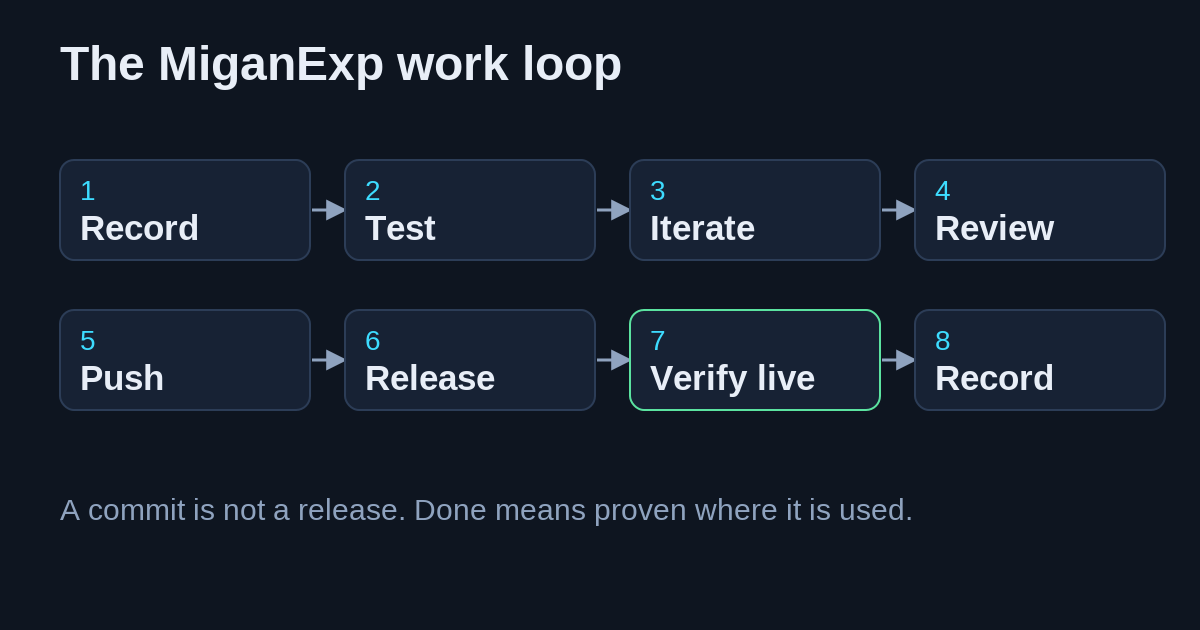
- Done means proven. A report saying "all done" does not count. What counts: a commit that exists, tests that pass, and the result where it is actually used.
- Mark what is real. Every claim is marked real or still a design, and "not yet tested" is written plainly.
Methods I have written up
Each method below comes from files and scripts that exist, not from theory. Those files still sit in my private repository and internal notes, not yet public, so you cannot check them directly yet. What you can check today: the Findings and the miganGO code.
- A hash-chained ledger: a work log nobody can edit quietlyHow I record every meaningful change in MiganExp: rows can only be appended, each row carries the hash of the previous one, and concurrent writers are locked out.
- The project standard: from direction to code, no skippingThe working structure I use on every project: direction first, then research, design, requirements, and only then code. One thing per file, with a small tool that keeps it tidy.
- The seven-persona gate: use it before calling it doneBefore a feature is called done, seven user personas try it for real. It passes only if all seven succeed. How it runs, how verdicts work, and where it falls short.
- The evaluator’s verdict, not the worker’s reportOf seven tasks an agent reported as done, the evaluator passed one. How I keep the one who does the work apart from the one who judges it.
- Model by work weight, cache by gap: two rules that save tokensDo not use the biggest model for everything. How I pick the model and the cache duration per agent task, and why a global one-hour cache actually loses money.
- One fact, one document: tidying without deletingA decision list in six places, a schedule in four. How I merged overlapping documents without discarding any, and the automatic checker that keeps them merged.
What you can check, and other notes
- FindingsSeven structured research records: claim, method, numbers, limits, and sources.
- Work logA dated timeline of experiments and releases.
- BlogNotes on method and the stories behind the work.
- PortfolioAgents and virtual worlds I have built.
- About FahmiThe author behind all of this.
All writing here is a synthesis of my work, not transcripts. AI helps draft it; I review before it is published.